
DMEM suits adherent, fast-growing cells that need higher nutrient concentrations. RPMI 1640 is the standard choice for suspension cells and blood-derived lines.
What Is DMEM (Dulbecco’s Modified Eagle’s Medium)?
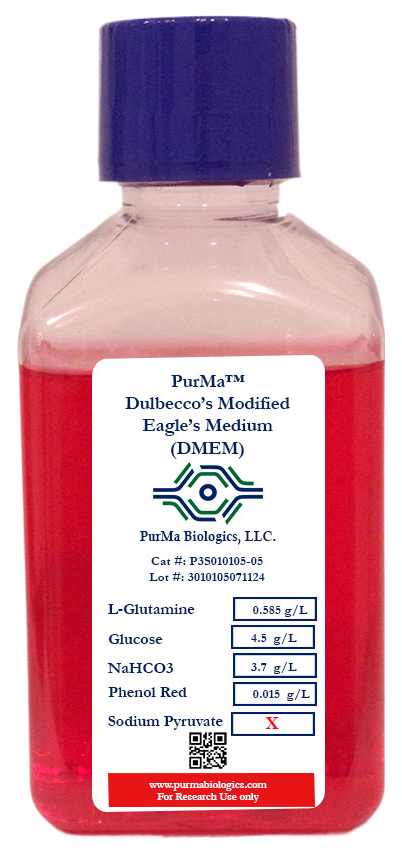
DMEM is a nutrient-rich modification of Eagle’s Minimal Essential Medium, with higher concentrations of amino acids and vitamins. It comes in high-glucose (4.5 g/L) and low-glucose (1 g/L) versions and has a relatively high bicarbonate level, so it’s used in a CO2 incubator. DMEM is the workhorse medium for many adherent cell lines and fast-growing cells that need plenty of glucose.
What Is RPMI 1640 (Roswell Park Memorial Institute 1640)?
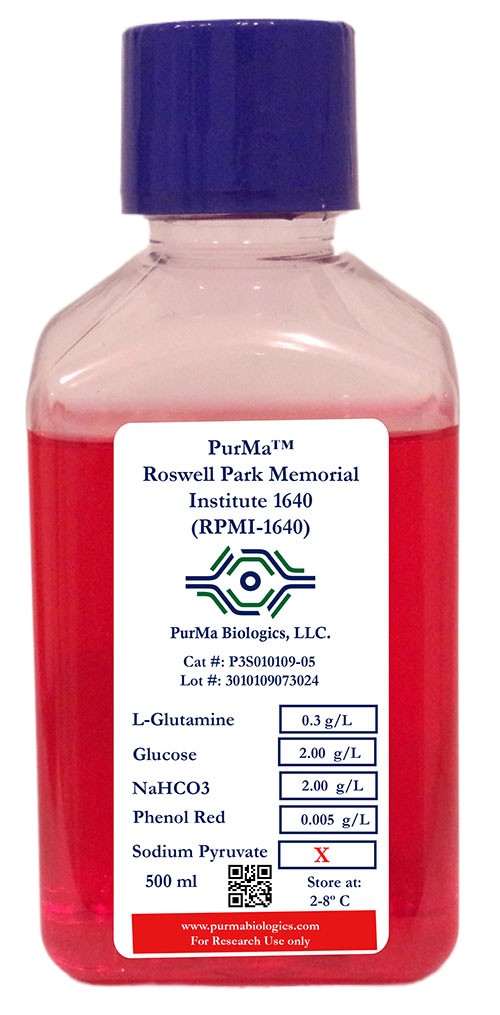
RPMI 1640 was originally developed for human lymphocytes and other suspension cells. It has a moderate glucose level (2 g/L), a distinct vitamin profile (including biotin, vitamin B12, and PABA), lower calcium, and a lower bicarbonate level suited to a 5% CO2 environment. RPMI 1640 is the standard choice for suspension cells and blood-derived cell lines.
DMEM vs RPMI 1640: Key Differences
| Factor | DMEM | RPMI 1640 |
|---|---|---|
| Glucose | High (4.5 g/L) or low (1 g/L) | Moderate (2 g/L) |
| Amino acids / vitamins | Enriched | Distinct profile (biotin, B12, PABA) |
| Calcium | Higher | Lower |
| Bicarbonate / CO2 | Higher | Lower (5% CO2) |
| Best for | Adherent cells | Suspension / blood cells |
From PurMa Biologics
Both media, made in house
PurMa manufactures DMEM and RPMI 1640 across a wide range of formulations, so you can match glucose, sodium bicarbonate, L-glutamine and phenol red to your existing protocol rather than the other way around.
RPMI 1640 MediumAll cell culture media
Made in the USA and manufactured in house. Certificate of Analysis with every lot. Bulk pricing, purchase orders and custom formulations welcome.
When to Use DMEM
DMEM is the right choice when you’re growing:
- Adherent cell lines such as fibroblasts, HEK293, HeLa, and many epithelial cells
- Fast-growing or high-demand cells that benefit from high glucose
- General-purpose adherent cultures where a rich medium is needed
When to Use RPMI 1640
RPMI 1640 is the better choice when you’re working with:
- Suspension cells, lymphocytes, and leukocytes
- Hematopoietic and immune cells
- Hybridomas and many blood-derived cancer cell lines
- Cells specifically recommended for RPMI by the supplier
Can You Substitute One for the Other?
Not freely. Most cell lines have a recommended medium, and switching can change how they grow. Some cells adapt to either medium, but many perform best in only one. Always check the recommended medium for your specific cell line, and if you do switch, adapt cells gradually and validate their growth and behavior before relying on results.
Choosing the Right Medium for Your Cells
The choice between DMEM and RPMI 1640 comes down to your cell type: DMEM for adherent, glucose-hungry cells, and RPMI 1640 for suspension and blood-derived cells. PurMa Biologics supplies research-grade Dulbecco’s Modified Eagle’s Medium (DMEM) and RPMI 1640 Medium in multiple formulations for reliable, consistent results.
New to RPMI? See our guide on what RPMI 1640 is and which cells it suits.