
- ✓Proudly made in the USA, manufactured in house
- ✓Certificate of Analysis available for every lot
- ✓Backed by decades of cell culture and protein biochemistry expertise
- ✓Bulk pricing, purchase orders, and custom formulations welcome
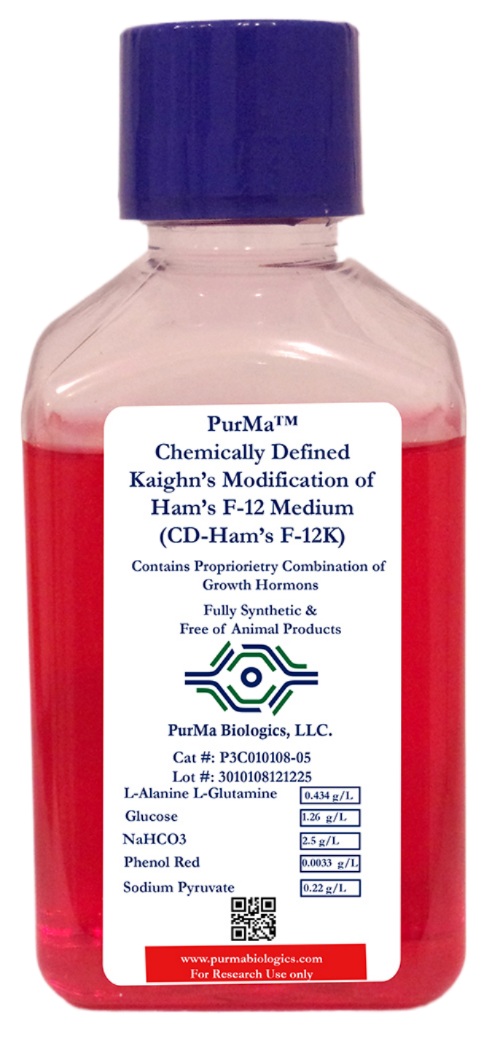
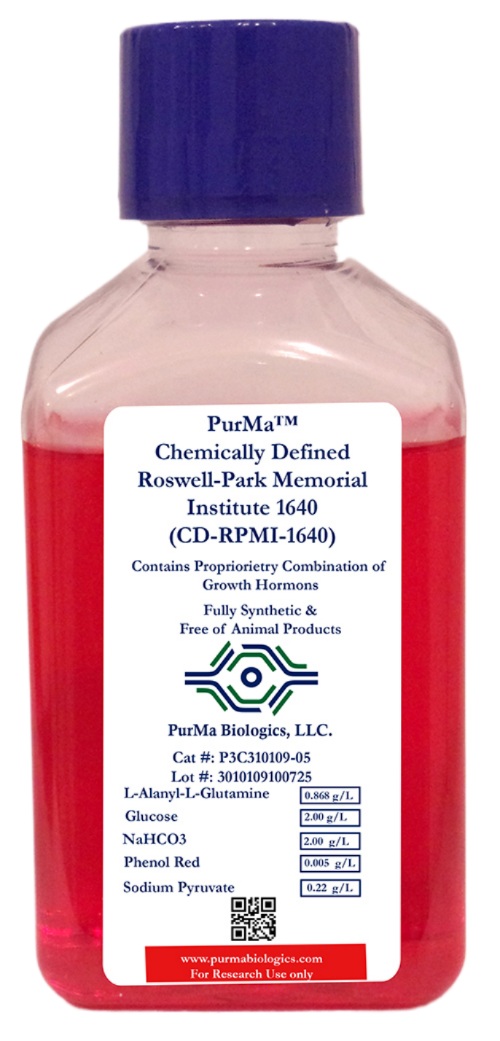
PurMa™Chemically Defined Roswell-Park Memorial Institute 1640 (CD-RPMI-1640)
PurMa™ Chemically Defined Roswell-Park Memorial Institute 1640 (CD-RPMI-1640) is a 100% synthetic, FBS-free medium designed for mammalian cell culture. This PurMa chemically defined RPMI – 1640 formulation contains no animal-derived components and replaces unstable L‑glutamine with L‑alanyl‑L‑glutamine for extended shelf life and improved buffering capacity. A proprietary mix of synthetic growth factors and nutrients supports robust growth while delivering high lot-to-lot consistency, ideal for regulatory-sensitive applications and reproducible cell-based assays.
This product is priced per order. Choose the options you need, then request a quote and we will reply by email.
For research use only. Not for human, veterinary or diagnostic use.
Description
Product Description
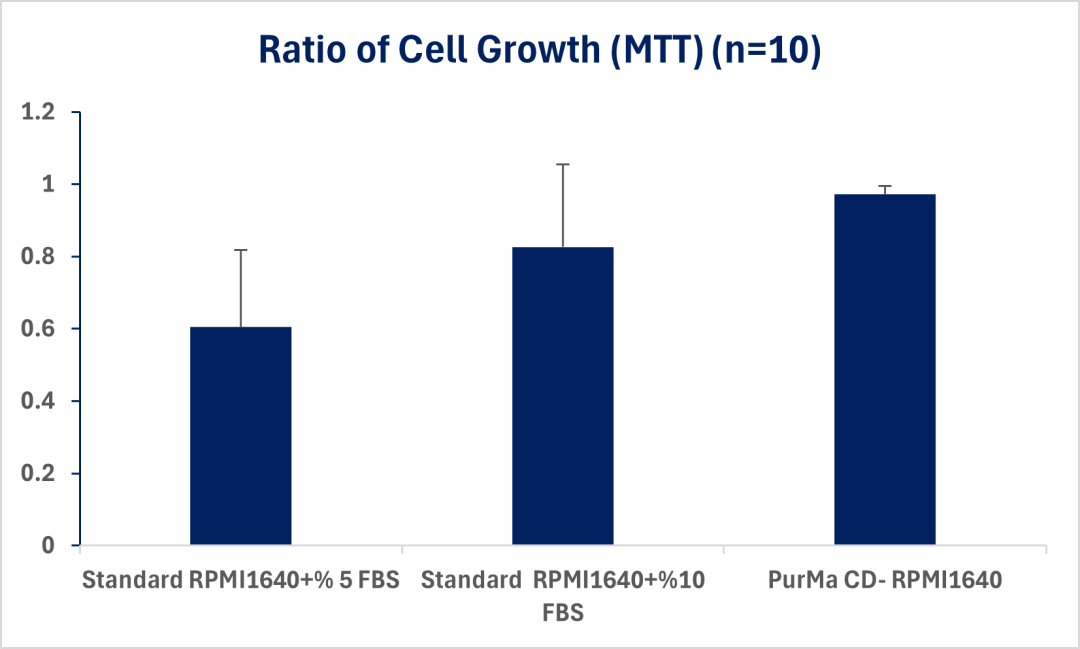
PurMa™ Chemically Defined Roswell-Park Memorial Institute 1640 (CD-RPMI-1640) is a fully synthetic, serum-free medium optimized for mammalian cell culture. Unlike conventional RPMI that requires 10% FBS, PurMa chemically defined RPMI 1640 contains no serum, no FBS, and no traces of animal-derived components. Every ingredient is known, controlled, and chemically defined.
This medium is ideal when you need reproducible performance, regulatory compliance, and clean experimental backgrounds without undefined serum variables.
Key Features and Benefits
- 100% chemically defined, FBS-free formulation
CD RPMI 1640 medium contains no serum, no FBS, and no animal-origin components. This reduces variability, simplifies regulatory documentation, and supports serum-independent workflows. - L‑alanyl‑L‑glutamine instead of L‑glutamine
The base of PurMa chemically defined RPMI 1640 uses L‑alanyl‑L‑glutamine for improved stability. This dipeptide minimizes glutamine breakdown, extends shelf life, and enhances buffering capacity, which can lower the risk of contamination and pH drift. - Proprietary synthetic growth factor cocktail
A defined blend of synthetic growth factors, hormones, and nutrients replaces serum functions. The result is reliable growth and viability without serum supplementation or animal-derived additives. - Consistent, controlled environment
Every component in CD-RPMI-1640 is characterized and quantified. This allows precise interpretation of cellular responses, improved assay reproducibility, and easier method transfer across labs. - Optimized for a wide range of mammalian cells
The formulation supports adaptation of many cell lines typically maintained in classical RPMI + 10% FBS. Once adapted, cells can be maintained and frozen using the same PurMa chemically defined RPMI 1640 system. - Stemcell technologies RPMI 1640 is a widely used cell culture medium that supports reliable growth and maintenance of diverse cell lines for advanced research applications.
Formulation
- The CD-RPMI-1640 formulation includes: Base formulation of Chemically Defined RPMI-1640 , P3C310109
- Base chemically defined RPMI-1640 with L‑alanyl‑L‑glutamine
Chemically Defined RPMI-1640, L‑alanine–L‑glutamine base (Cat# P3C310109).
- Synthetic growth factor and hormone cocktail
A proprietary mixture of fully synthetic growth factors, hormones, and nutrients supports proliferation and viability without any serum or animal-derived components. - This composition allows truly serum-independent culture while preserving performance for demanding research and preclinical workflows.
- Gradual Transition from FBS-Containing Media
- For reliable adaptation from 10% FBS media to PurMa chemically defined RPMI 1640, a stepwise reduction of FBS is strongly recommended. Use at least two control conditions:
- A reference culture maintained in standard RPMI + 10% FBS only.
- A culture in PurMa chemically defined RPMI 1640 + 10% FBS that will undergo staged FBS reduction.
- A typical transition schedule:
- Start: 10% FBS + PurMa™ Chemically Defined Medium (adaptation culture)
- After 48 hours: 8% FBS + PurMa™ Chemically Defined Medium
- After 48 hours: 6% FBS + PurMa™ Chemically Defined Medium
- After 48 hours: 4% FBS + PurMa™ Chemically Defined Medium
- After 48 hours: 2% FBS + PurMa™ Chemically Defined Medium
- After 48 hours: 1% FBS + PurMa™ Chemically Defined Medium
- After 24 hours: 0% FBS, PurMa chemically defined RPMI 1640 only
At each step: Spin down cells, fully discard the spent medium and replace with fresh medium containing the next lower FBS level. You do not need to start with an extremely high cell density; around 500,000 cells/ml is usually sufficient. Use more than one plate or flask during adaptation, since a small proportion may experience stress or contamination.
Long-Term Culture and Freezing
- Once cells are fully adapted to PurMa chemically defined medium RPMI 1640, they should remain in the same chemically defined formulation and vendor for routine culture and cryopreservation.
- Expand adapted cells and prepare multiple plates for freezing.
- When thawing adapted cells during the first week, supplement PurMa chemically defined RPMI 1640 with 10% PurMa™ CD Booster (Cat# P3C10144) to support recovery.
- Maintain cells exclusively in PurMa chemically defined medium after adaptation to preserve phenotype and performance.
- This workflow supports stable, long-term, serum-free culture suitable for reproducible experiments and regulated environments.
The CD-RPMI-1640 includes a base formulation including L-Alanine -L glutamine : Base formulation of Chemically Defined RPMI-1640 , P3C310109
FAQs
- Q1. What is PurMa chemically defined RPMI 1640?
A1. PurMa chemically defined RPMI 1640 is a fully synthetic, serum-free version of RPMI-1640 designed for mammalian cell culture. It contains only chemically defined components and a proprietary synthetic growth factor cocktail, with no FBS or animal-derived materials. - Q2. Does PurMa chemically defined RPMI 1640 contain any FBS or animal components?
A2. No. PurMa chemically defined RPMI 1640 is completely FBS-free and animal component–free. All nutrients, growth factors, and hormones are synthetic and chemically defined, which supports regulatory compliance and reduces lot-to-lot variability. - Q3. Why does this medium use L‑alanyl‑L‑glutamine instead of L‑glutamine?
A3. L‑alanyl‑L‑glutamine is more stable than free L‑glutamine. It slows glutamine degradation, extends medium shelf life, and improves buffering capacity. This helps maintain a more stable culture environment and can reduce contamination risks related to pH shifts and breakdown products. - Q4. How do I transition cells from 10% FBS RPMI to PurMa chemically defined RPMI 1640?
A4. Transition cells gradually by reducing FBS in steps. Start with 10% FBS in PurMa chemically defined medium, then lower FBS to 8%, 6%, 4%, 2%, and 1% every 48 hours, spinning down and fully replacing the medium each time. Finally, move to 0% FBS and use only PurMa chemically defined RPMI 1640. Keep parallel control cultures in standard 10% FBS medium. - Q5. Do I need booster supplements with PurMa chemically defined RPMI 1640?
A5. For routine culture of adapted cells, PurMa chemically defined RPMI 1640 is used as supplied. During the first week after thawing adapted cells, we recommend adding 10% PurMa CD Booster (Cat# P3C10144) to support robust recovery. - Q6. What applications is PurMa chemically defined RPMI 1640 suitable for?
A6. PurMa chemically defined RPMI 1640 is ideal for serum-free mammalian cell culture, mechanistic studies requiring low background, assay development, bioproduction optimization, and projects that demand high reproducibility and simplified regulatory documentation due to its fully defined, animal-free composition. - Q7. What is RPMI- 1640 used for in cell culture?
A7. 1640 medium rpmi is widely used for mammalian cell culture, supporting lymphocytes, hybridomas, and many suspension and adherent cell lines. In its chemically defined form, such as PurMa chemically defined RPMI 1640, it enables serum-free, animal component–free culture with improved reproducibility.
References
- Growth of NS0 cells in protein-free, chemically defined medium.
- Culture of normal human leukocytes. Moore GE, et al. 1967 Feb 20;199(8):519-24. PMID: 4960081
- Leukocytes as carriers in the transmission of bovine leukemia: certain morphologic and functional characteristics of cultured leukocytes from normal and leukemic cattle. Dunne HW, et al. Am J Vet Res. 1970 Apr;31(4):597-617. PMID: 5437104.
- Long-term culture of human leukaemic leukocytes. Pössnerová V, et al. 1970;17(5):513-23. PMID: 5274436
-
Parameter Specification Appearance Red, clear liquid pH 7.2 ± 0.1 Osmolality 275-360 mOsm/L Endotoxin NMT< 2EU/mL Mycoplasma Negative Suitability Suitable for mammalian cell culture Additive Sodium pyruvate Indicator Phenol red Mycoplasma Detection Negative Sterility Tested Sterile filtered using 0.1 µm filter, 3 Times Form Liquid Shipping Condition Room temperature, Overnight
Learn more: What Is RPMI 1640?
Additional information
| Condition | CD-RPMI-1640 Standard Formulation, CD-RPMI-1640 w/o L-Alanyl-L-Glutamine, CD-RPMI-1640 w/o Phenol Red, CD-RPMI-1640 w/o Sodium Bicarbonate, CD-RPMI-1640 w/o Glucose, CD-RPMI-1640 w/o L-Alanyl-L-Glutamine, w/o Phenol Red, CD-RPMI-1640 w/o Phenol Red, w/o Sodium Bicarbonate, CD-RPMI-1640 w/o L-Alanyl-L-Glutamine, w/o Phenol Red, w/o Sodium Bicarbonate, CD-RPMI-1640 With Low Glucose (1 g/L), CD-RPMI-1640 With High Sodium Bicarbonate (3.7 g/L), CD-RPMI-1640 With 15 mM HEPES (3.6 g/L), CD-RPMI-1640 With 25 mM HEPES (5.9 g/L), CD-RPMI-1640 With 15 mM HEPES (3.6 g/L), High Sodium Bicarbonate (3.7 g/L), CD-RPMI-1640 With 25 mM HEPES (5.9 g/L), High Sodium Bicarbonate (3.7 g/L, CD-RPMI-1640 w/o Phenol Red, with 15 mM HEPES (3.6 g/L), CD-RPMI-1640 w/o Phenol Red, with 25 mM HEPES (5.9 g/L), CD-RPMI-1640 w/o Phenol Red, High Sodium Bicarbonate (3.7 g/L) |
|---|---|
| Size | 1X 100 ml, 1X 1000 ml, 1X 500 ml |
Documents
Certificate of Analysis (COA): Available upon request for your specific order — email info@purmabiologics.com and we will send the current lot documentation.
Safety Data Sheet (SDS): Available upon request — email info@purmabiologics.com.
What our customers say about PurMa Biologics
Feedback from labs we supply, across our full catalogue.
We have been working with PurMa biologics for the past several years, we buy cell culture related media like DMEM F12 and EMEM and Fetal Bovine Serum. We appreciate the high quality and reasonable price, and great customer service.
We purchase everything we need related to cell and tissue culture from PurMa, reagents like: DMEM, LL15, EMEM, FBS, trypsin, antibiotics mix100X and... Always great quality, fast processing and shipping. We are totally satisfied.
Very fast, efficient, and economic service. Great for new PIs like me.
it is reliable vendor!
We always buy our agarose from PurMa and have never been disappointed.
I recently had the pleasure of interacting with Dr. Seif Azadi from Purma Biologics, and I cannot thank him enough for his expertise and prompt assistance. His deep knowledge and dedication were instrumental in meeting our laboratory’s needs with remarkable efficiency. We ordered FBS, DMEM, and Trypsin from Purma Biologics, and I’m thrilled to report that all the products have performed exceptionally well. They consistently deliver reproducible results, significantly enhancing the reliability of our experiments. Thank you, Team Purma Biologics, for your good products and support!
Frequently asked questions
How should I store PurMa™Chemically Defined Roswell-Park Memorial Institute 1640 (CD-RPMI-1640)?
Store at 2 to 8 degrees C, protected from light, and do not freeze unless the label states otherwise. Freezing can precipitate salts and degrade light sensitive components such as riboflavin and folic acid. Always follow the storage line on the Certificate of Analysis for the specific lot.
What is the shelf life once opened?
Unopened and correctly stored, the typical shelf life is 12 months from manufacture. Once opened, use within about four weeks and always handle in a laminar flow hood, since the practical limit after opening is contamination risk rather than chemical stability.
Is it sterility and endotoxin tested?
Yes. Every lot is sterile filtered and tested for sterility and endotoxin, and a Certificate of Analysis is issued for each lot. The COA is available on request for any catalogue number.
Do I need to add L-glutamine?
It depends on the formulation you order. Standard formulations may contain free L-glutamine, which degrades in solution over time, while MAX formulations use a stable L-alanyl-L-glutamine dipeptide that does not require fresh supplementation. Check the option you have selected before adding more.
Can I order this in bulk or as a custom formulation?
Yes. Bulk volumes and custom formulations are made to order, including adjusted glucose, bicarbonate, buffering and cation content. Use the request bulk pricing button on this page and include the specification you need.
Related products
-
- Sale!
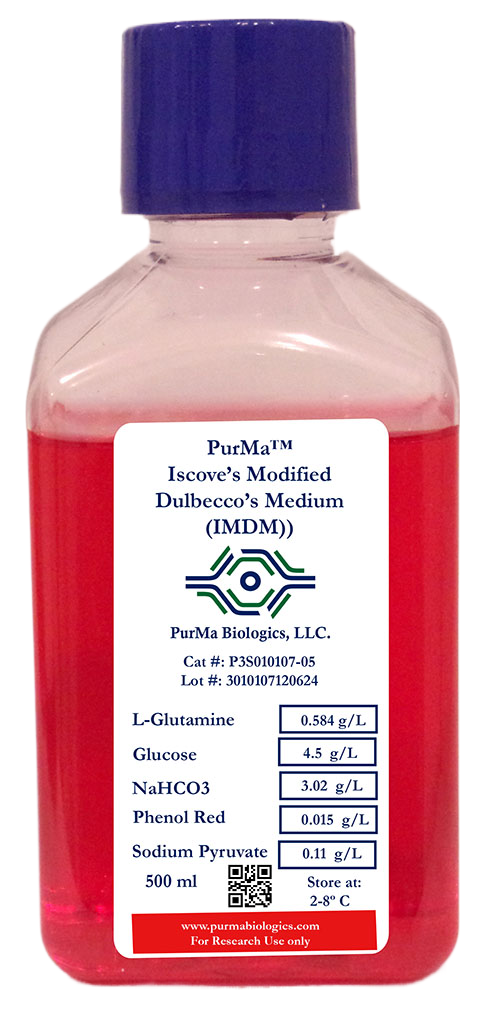
- Cell Culture Media, Iscove's Modified Dulbecco's Medium (IMDM)
PurMa™ Iscove’s Modified Dulbecco’s Medium (IMDM)
- Price range: $21.62 through $557.15
- Select options This product has multiple variants. The options may be chosen on the product page
-
- Sale!
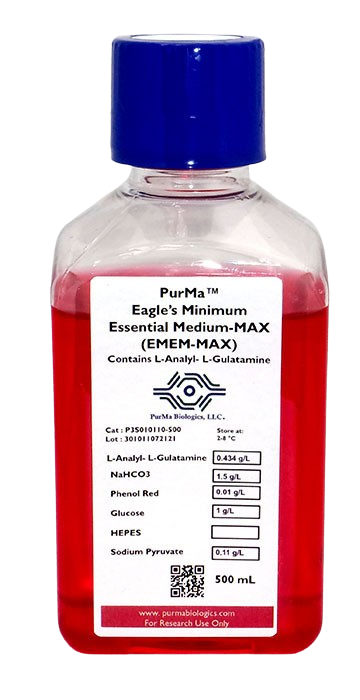
- Cell Culture Media, Eagle's Minimal Essential Medium (EMEM)
Eagle’s Minimal Essential Medium-MAX (EMEM-MAX)
- Price range: $29.15 through $547.30
- Select options This product has multiple variants. The options may be chosen on the product page

Reviews