
FBS supplies growth factors, hormones, attachment factors, lipids, trace elements and carrier proteins, substituting for the in vivo environment that cultured cells otherwise lack. It is typically used at 10 percent. Because it is a pooled natural product its composition varies between lots, which is why labs running sensitive assays test and reserve a specific lot.
Fetal bovine serum is still the default growth supplement in many labs, but it is also one of the least controlled variables in the room. That contradiction explains why so many teams rely on it and distrust it at the same time.
If you are asking what is fetal bovine serum used for, the short answer is this. It is used to help mammalian cells survive, attach, recover, and proliferate in vitro when basal media alone are not enough. The practical answer is more useful. FBS sits underneath routine cell line maintenance, fragile primary cultures, vaccine upstream processes, monoclonal antibody workflows, and a long list of development-stage assays where cells need a broad, forgiving growth environment.
The Power and Problem of Fetal Bovine Serum
In day-to-day cell culture, FBS solves problems quickly. A difficult line grows. A stressed culture recovers after thaw. A primary isolate attaches instead of drifting. A transfection workflow becomes more forgiving. That is why teams keep it in standard operating procedures long after they understand its drawbacks.
Its importance is not niche. The global fetal bovine serum market was valued at USD 2.09 billion in 2024 and is projected to reach USD 7.01 billion by 2033, growing at a CAGR of 14.4%, and that demand is tied to real manufacturing needs, including vaccine production where over 80% of manufacturers rely on it and regenerative medicine where approximately 70% of cell-based therapy clinical trials depend on it, according to Market Data Forecast’s fetal bovine serum market analysis.
That scale matters because it tells you something practical. FBS remains embedded in workflows that have to work under time pressure, not just in academic method sections.
Why teams keep using it
FBS gives cells a wide safety margin. It supports many cell types without the level of optimization that serum-free or chemically defined systems often require. For a new team member, that is the first lesson. FBS is often chosen because it is operationally tolerant, not because it is scientifically perfect.
Common reasons labs keep FBS in the workflow include:
- General resilience: It helps rescue cultures that would struggle in leaner formulations.
- Broad compatibility: One serum-containing platform can support several lines in the same lab.
- Process convenience: It can reduce the amount of media development needed early in a project.
- Historical comparability: Many legacy protocols, internal controls, and published methods were built around FBS.
Practical takeaway: FBS is not just a nutrient supplement. It is a risk buffer. The trouble is that the same buffer can hide variability until it becomes a reproducibility problem.
Where people get burned
The mistake is treating FBS like a simple commodity. It is not. It is a biologically active, undefined input. If you use it casually, it will eventually show up in assay drift, inconsistent morphology, changed growth rates, or unexplained production variability.
This represents the double edge. FBS helps cells grow fast, but it can also make your system harder to interpret.
What FBS Is and Why It Works So Well
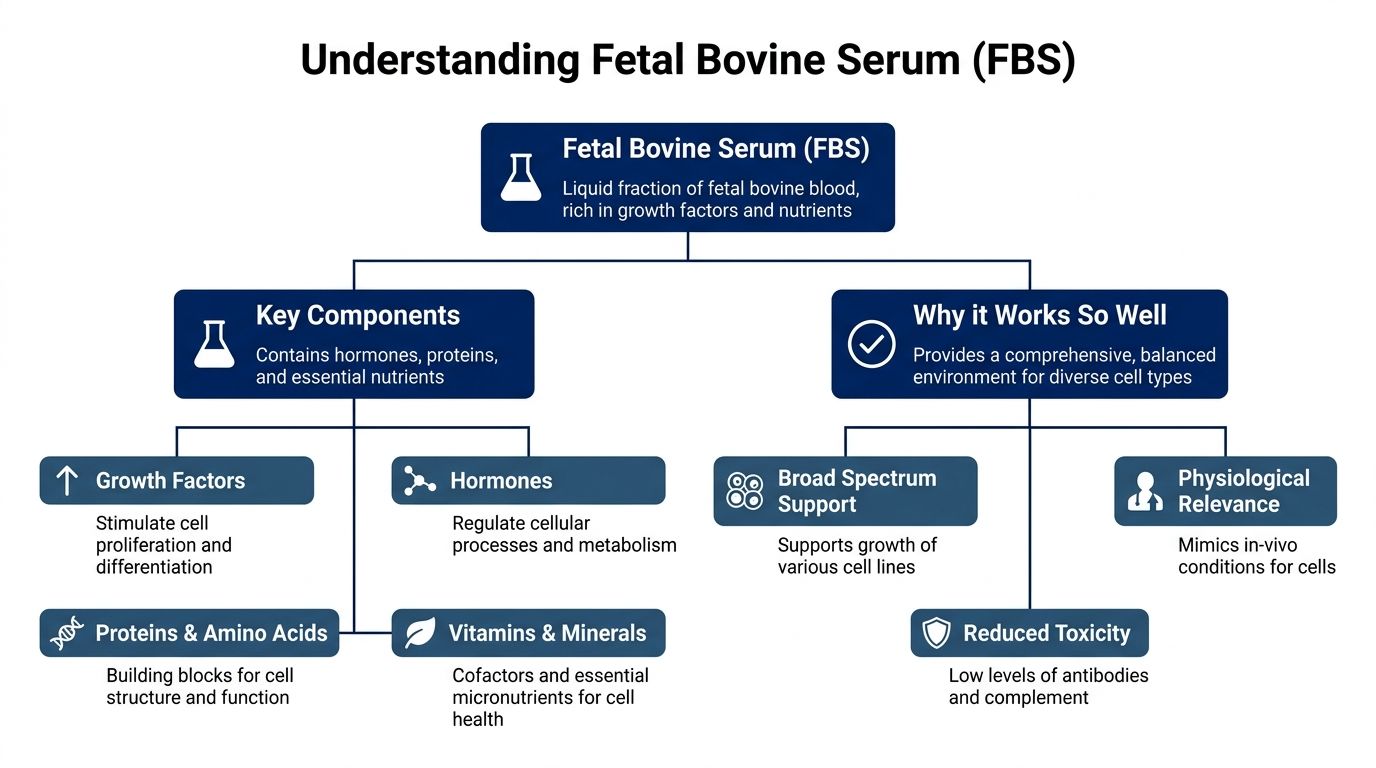
Fetal bovine serum is the liquid fraction obtained from fetal bovine blood after clotting factors and cells are removed. In practical culture terms, it is a dense mix of biologically active components that cells can use immediately.
A useful mental model is this. FBS acts like a cellular growth smoothie. It does not deliver one purified signal. It delivers a broad mix of proteins, hormones, nutrients, and growth-promoting factors at once.
The composition advantage
What makes it effective is not only richness, but balance. The verified data notes that FBS contains many biologically active components, including growth factors, hormones, amino acids, vitamins, and proteins that support mammalian cell proliferation and reduce unwanted differentiation pressure in many routine systems.
It also performs better than calf or adult bovine serum in sensitive applications for specific biochemical reasons. FBS is typically supplemented at 5 to 10% concentration in basal media, and its advantage comes from significantly lower gamma-globulin levels and higher concentrations of growth factors compared with calf or adult bovine serum, which supports rapid and consistent growth with less antibody interference, as described by Thermo Fisher’s FBS basics reference.
Why lower antibody interference matters
This point is easy to underestimate. Alternative bovine sera can contain antibodies that bind cells and interfere with growth. In practice, that can mean slower recovery, more fragile passages, or cultures that never quite behave the same way twice.
With FBS, many cell types see:
- Cleaner recovery after thaw
- More reliable attachment in early passages
- Less spontaneous stress behavior
- Better tolerance to routine handling errors
The concentration question
For standard mammalian culture, a common starting point is the 5 to 10% range and optimized only if the application forces them to. Running above that can rescue some difficult cultures, but it can also amplify cost, variability, and downstream cleanup problems.
That is why experienced groups do not ask only, “Will the cells grow?” They ask, “What is the lowest serum level that keeps this system reliable?”
Tip: If a cell line only behaves at the highest serum level you can afford, you may have a media design problem, not a serum concentration problem.
The Core Uses of FBS in Research and Bioproduction
The fastest way to understand what fetal bovine serum is used for is to follow where it shows up in real workflows. It is not one use case. It is a support layer across many.
Near the bench, it is usually introduced as a growth supplement. In production, it becomes a process input that can affect yield, consistency, and compliance.
Routine mammalian cell expansion
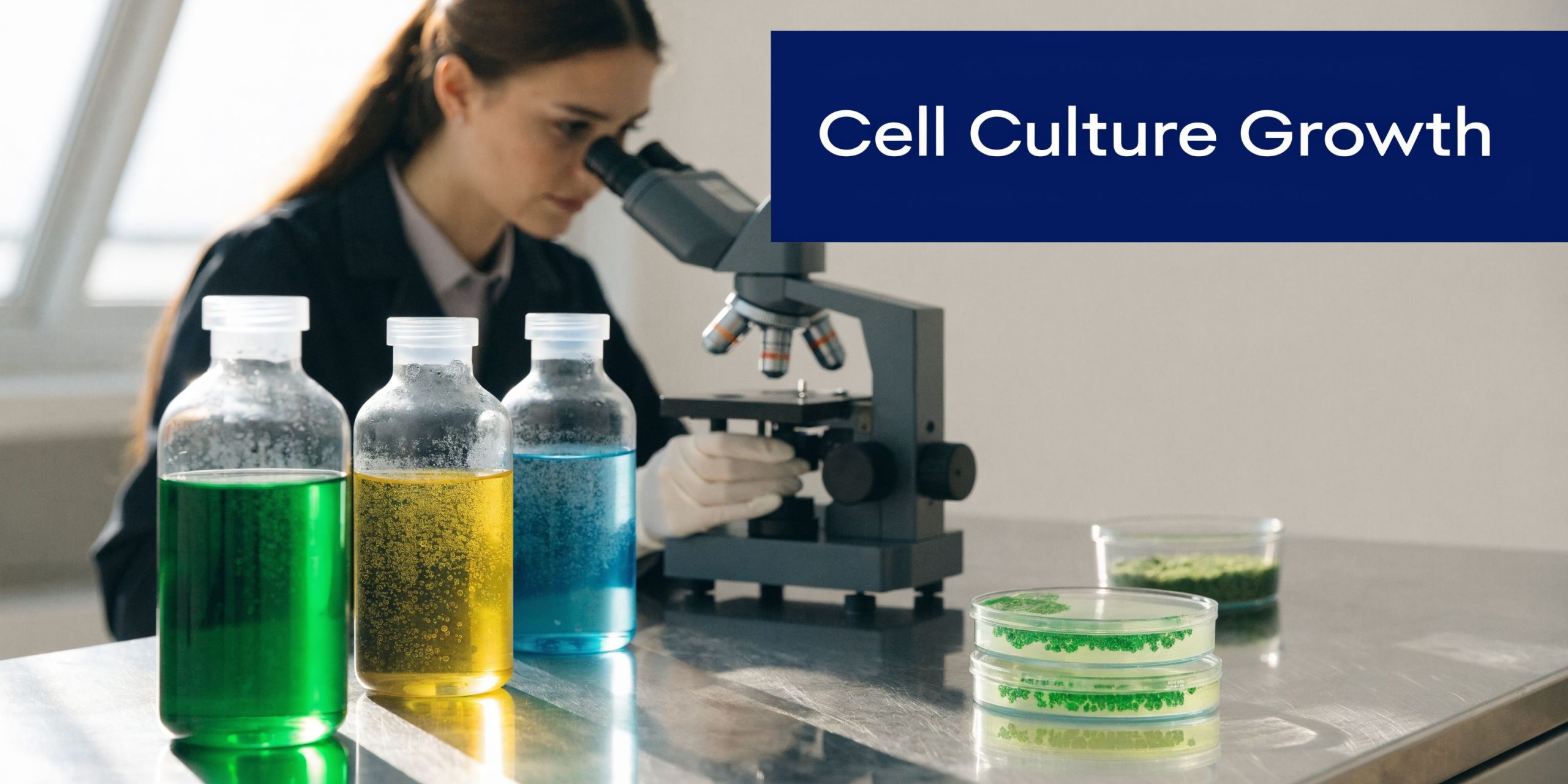
This is the most common use. FBS is added to basal media so established cell lines can proliferate with less adaptation work. When a team is maintaining CHO, HEK-derived, fibroblast, epithelial, or mixed research lines, FBS often acts as the broad-spectrum supplement that keeps the platform stable enough for routine passaging.
It is especially useful when the lab runs many different cell types and does not want a separate custom medium for each one.
Primary cell culture support
Primary cells are less forgiving than immortalized lines. They often need stronger attachment support and a more complex extracellular environment. FBS helps here because it supplies a broad set of survival and growth signals that basal media alone may not provide.
In real terms, FBS frequently proves its value here. A primary isolate that dies in a minimalist system may attach and expand in serum-containing conditions long enough for the team to characterize it, bank it, or begin adaptation.
Stem cell and differentiation-adjacent work
FBS is still used in some stem-cell-adjacent workflows, especially early-stage or exploratory work, because it can keep cells alive and proliferative. But this is also where many teams run into its limitations.
An undefined supplement can complicate controlled fate decisions. If the scientific question depends on precise differentiation cues, FBS often works against you even when it improves gross cell growth.
Vaccine production and viral propagation
In manufacturing and process development, FBS plays a more direct operational role. It supports cell health during virus propagation and can improve the conditions needed to maintain productive host cultures.
Verified data from Cytiva states that in vaccine production, FBS directly enhances viral yield and stability, and that it is used in both adherent and suspension systems for viral vector and gene therapy manufacturing. It is also described as indispensable for cultivating producer cell lines used in therapeutic proteins and monoclonal antibodies in biopharmaceutical manufacturing in Cytiva’s overview of fetal bovine serum.
Monoclonal antibody and biologics development
In antibody and biologics work, FBS is often present earlier in development than later in commercial manufacturing. Teams use it to establish cells, compare clones, recover stressed cultures, or de-risk early process development before shifting to more controlled formulations.
That distinction matters. What works for clone rescue or rapid expansion may not be what you want in a locked GMP process.
A short visual overview helps here:
Transfection, assay development, and workflow recovery
Many labs also use FBS because it smooths out imperfect workflows. Cells recovering from trypsinization, thawing, or transfection often tolerate stress better in serum-containing media. That makes FBS common in assay development, screening model establishment, and rescue steps after process interruptions.
This is one of the less glamorous but more realistic answers to what fetal bovine serum is used for. It is often used because teams need a system that still works after ordinary human handling.
Cell banking and pre-production stabilization
Before a process becomes fully defined, FBS is frequently used to stabilize cells for banking and expansion. It can support generation of master or working stocks in research settings, though therapeutic workflows usually demand tighter control and more explicit justification.
What works well and what does not
A practical summary looks like this:
| Workflow | Where FBS works well | Where it becomes a liability |
|---|---|---|
| Routine cell maintenance | Mixed cell lines, fast setup, recovery support | Long-term reproducibility across lots |
| Primary culture | Attachment, early survival, fragile isolates | Mechanistic interpretation |
| Vaccine and vector work | Upstream support for productive host cultures | Supply, traceability, lot qualification |
| Antibody development | Early clone work, rescue, exploratory process development | Late-stage process control |
| Stem-cell-sensitive systems | Basic expansion under forgiving conditions | Controlled differentiation and xeno risk |
A Practical Guide to FBS Grades and Handling
Most serum failures do not come from a mysterious biological event. They come from using the wrong grade for the job, storing it poorly, or changing lots too casually.
Match the grade to the application
Commercial labels matter because they signal how the serum was processed or qualified. In practice, the decision starts with the application.
For example:
- Standard or premium FBS: Common for routine expansion and general research culture.
- Charcoal-stripped FBS: Useful when you need reduced background from hormones or other small hydrophobic molecules.
- Dialyzed FBS: Useful when you want tighter control over small metabolites in nutrient-response work.
- Endotoxin-controlled or more tightly screened lots: Better suited to sensitive cells, bioprocess development, or workflows where inflammatory background is unacceptable.
Do not buy the most specialized serum by default. Buy the serum that removes the specific risk your assay presents.
Handle it like a critical raw material
Once serum arrives, handling discipline matters more than people think.
Good practice includes:
- Aliquot early: Repeated freeze-thaw cycles are an easy way to degrade performance.
- Label by lot clearly: Never let two active lots drift around the same incubator without traceability.
- Use one reservation strategy: If a project will run for months, reserve enough of the same lot up front.
- Document first-use performance: A short lot qualification note saves time later.
Do not improvise lot changes
One operational point is explicit in the verified data from Thermo Fisher. When moving to a new FBS batch, labs should adapt cells gradually by mixing 50% old serum with 50% new serum to help cells acclimatize.
That sounds simple because it is. It is also one of the easiest controls to skip when a bottle runs out on a Friday.
Tip: Treat serum changeover the way you would treat a media change in a production process. Plan it, document it, and watch the cells for several passages.
What does not work
The worst habits are familiar:
- Switching lots without a side-by-side test
- Thawing the same bottle again and again
- Using one serum grade for every assay in the building
- Assuming “the cells look fine” is enough qualification
Those shortcuts save hours and can cost weeks.
Managing Batch Variability to Ensure Reproducibility
Batch variability is one of the main reasons two competent teams can run the same protocol and get different results.
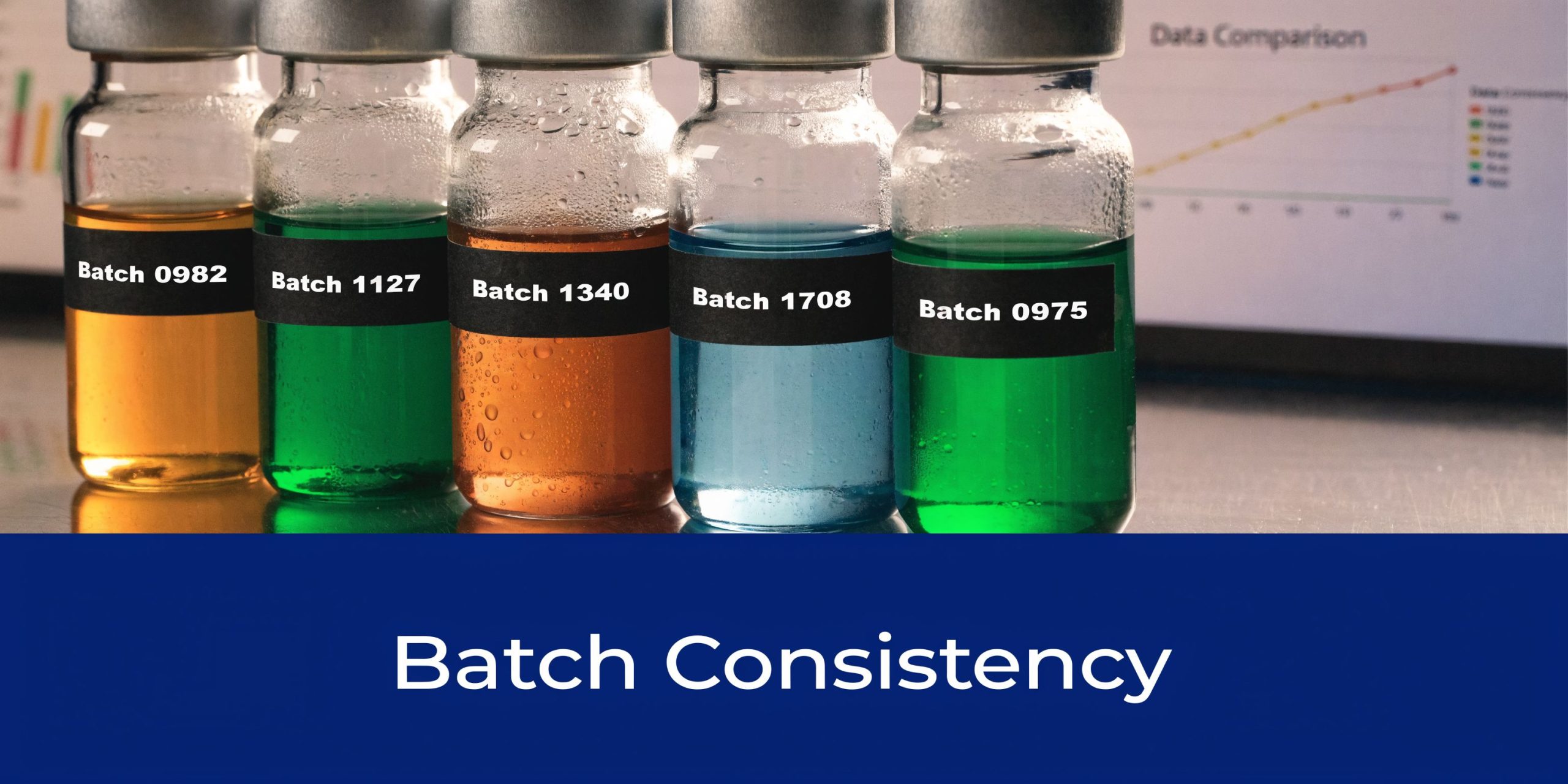
With FBS, the problem is built into the material itself. Serum is a biologic input with a shifting mix of growth factors, attachment factors, hormones, lipids, and inhibitory components. Even when cells survive and grow, changes from lot to lot can alter growth rate, morphology, transfection performance, differentiation behavior, and assay noise. Reproducibility problems often start there.
What variability looks like in practice
In a real lab, lot drift usually shows up as small operational changes before it becomes an obvious failure.
You may see cultures reaching confluence later, morphology shifting after passage, a narrower transfection window, or a reference assay that starts missing its usual range. Sometimes the first signal is a technician saying the cells feel less forgiving even though the SOP, incubator settings, and base medium have not changed. Those observations matter. Early warning signs are often qualitative before they become measurable deviations.
That is what makes FBS variability expensive. It adds uncertainty to the process, and uncertainty drives repeats, troubleshooting time, and delayed decisions.
The minimum control package
Teams that keep serum-based workflows under control usually apply a simple qualification plan.
- Pre-test candidate lots on the cell line, assay, or process step that matters.
- Reserve enough volume from one lot to cover the planned study, campaign, or production window.
- Bridge old and new lots instead of making an abrupt change.
- Track performance over several passages using growth, morphology, viability, and assay-specific readouts.
Treat this with the rigor of raw-material qualification. In practice, that means predefined acceptance criteria, documented lot approval, and a clear record of where each lot was used. If a deviation appears later, traceability determines whether the team can isolate the cause in hours or spend a week guessing.
Decide based on process tolerance
Focus on whether your workflow can tolerate the inherent variability of FBS.
For exploratory cell biology, that tolerance may be fairly wide. For stem cell work, potency-linked assays, viral vector production, cell therapy manufacturing, or any regulated process, tolerance is usually much tighter. At that point, each new lot adds qualification cost and schedule risk. The hidden cost is not just the serum price. It is the labor required to test it, reserve it, monitor it, and explain its impact when performance shifts.
There is also a practical threshold where continued lot management stops being efficient. If the process depends on narrow performance windows, serum-free or chemically defined media often provide better control than repeated FBS qualification cycles. Some labs evaluate suppliers such as PurMa Biologics because they offer both serum and defined-media options, which helps teams choose the lowest-risk supplement for each stage of development rather than forcing one approach across the whole workflow.
Key takeaway: Manage FBS as a variable raw material, then decide whether that variability fits the process tolerance, quality target, and regulatory path.
Ethical Considerations and Modern FBS Alternatives
The ethical issue around FBS is no longer peripheral. It now sits alongside supply risk, traceability, and product consistency in routine procurement decisions.
The verified data states that BSE-free certification covers only a portion of global FBS, and that growing ethical scrutiny and supply instability are pushing labs toward alternatives. The same verified data also states that chemically defined media offer significantly higher consistency in sensitive applications like stem cell differentiation without the immunogenicity or contamination risks linked to undefined animal-derived inputs, based on the provided PubMed-linked reference on FBS concerns and alternatives.
Why this changes lab decisions
For a basic research lab, ethics may start the conversation. For a manufacturing team, control usually closes it.
Undefined animal-derived material creates several practical problems:
- Traceability burden
- Lot qualification work
- Xeno-component risk
- Harder regulatory justification
- Supply exposure when availability tightens
That does not mean FBS has no place. It means it should be a chosen input, not an inherited default.
The main alternatives
The array of alternatives is easier to understand if you separate three categories.
Serum-Free Media or SFM
These remove serum but may still contain complex or proprietary supplements. They are often a useful transition step.Chemically Defined Media or CDM
These are built from known components. They are the strongest option when reproducibility and control matter most.Human-derived supplements such as platelet lysate
These can work well in some human cell workflows, but they still introduce donor-derived variability and screening burdens.
Comparison of Cell Culture Supplements
| Attribute | Fetal Bovine Serum (FBS) | Serum-Free Media (SFM) | Chemically Defined Media (CDM) |
|---|---|---|---|
| Composition | Broad, biologically rich, undefined | More controlled than serum, but may still include complex supplements | Defined components with tighter control |
| Ease of use | Often easiest for initial growth and rescue | Moderate. Usually needs adaptation work | Highest optimization burden upfront |
| Reproducibility | Weaker because lots vary | Better than FBS in many systems | Strongest consistency |
| Ethical profile | Animal-derived with ongoing ethical concerns | Depends on formulation | Best option when avoiding animal-derived inputs |
| Regulatory fit | Harder to justify in advanced therapeutic workflows | Better than FBS | Usually strongest fit for tightly controlled processes |
| Best use case | Early research, rescue, broad compatibility | Intermediate transition and targeted applications | Sensitive assays, GMP-oriented development, controlled differentiation |
What works and what does not
A common mistake is replacing FBS too fast with a medium that does not match the biology of the cell type. Another is staying with FBS in applications where its undefined nature directly undermines the purpose of the assay.
Good decisions come from matching the supplement to the risk:
- exploratory growth support
- sensitive differentiation control
- GMP alignment
- supply-chain resilience
- interpretability of readouts
How to Choose the Right Supplement for Your Lab
The best choice depends on what failure would hurt most.
If your priority is getting a broad range of cells to grow quickly, FBS still has a role. If your priority is lot-to-lot reproducibility, defined inputs, and cleaner regulatory logic, move toward SFM or CDM.
A simple decision checklist:
- Cell type: Fragile primary cells often need broader support than adapted production lines.
- Application: Basic discovery tolerates more variability than release-facing development.
- Reproducibility need: If small signal drift matters, undefined supplements become expensive.
- Regulatory path: The closer you are to therapeutic or GMP use, the weaker the case for FBS by default.
- Team capacity: Defined media demand adaptation work. Plan for it.
- Supply risk tolerance: If a project cannot absorb lot qualification delays, reduce dependence on serum.
Choose the supplement that removes the most important risk in your actual workflow, not the one everyone inherited.
Which serum do you need?
Made in the USA and manufactured in house. Certificate of Analysis with every lot. Bulk pricing, purchase orders and custom formulations welcome.
Frequently Asked Questions About FBS
Is heat inactivation always necessary?
No. Teams often apply it by habit. Use it only when the workflow benefits from complement reduction or when the protocol specifically calls for it. Unnecessary processing adds another handling variable.
Can I reduce FBS concentration to save cost?
Sometimes, yes. But do not do it blindly. If you reduce serum, verify growth rate, morphology, viability, and your key assay readout over several passages. A cheaper medium is not cheaper if it destabilizes the system.
How should I switch to a new lot?
Do not hard switch unless the cells are known to tolerate it. A controlled bridge is safer. Use the old lot and new lot together during transition and monitor growth and morphology closely.
When should I stop using FBS and move to defined media?
Move when the variability, traceability, or ethical burden becomes larger than the convenience benefit. That usually happens in sensitive differentiation work, advanced process development, and regulated therapeutic pathways.
Is FBS still useful in early development?
Yes. It is often useful for cell recovery, exploratory expansion, and rescue work. The mistake is allowing an early-stage convenience reagent to become a late-stage process dependency.
What is the main operational rule for FBS?
Treat it like a critical raw material, not a background reagent. Qualify it, track the lot, handle it carefully, and change it deliberately.
If your team is deciding whether to stay with FBS, qualify a new lot, or transition toward more controlled media, PurMa Biologics offers cell culture media, sera, reagents, and technical support relevant to mammalian research and bioproproduction. For labs trying to improve reproducibility without disrupting active programs, that kind of mixed portfolio can be useful because it supports both serum-based workflows and the move toward more defined systems.
Serum is protein rich, and quantifying protein is a routine step in most labs. See our Bradford assay protocol for a step-by-step method and standard curve.