
FBS remains the broad-use default with higher growth factor content. Horse serum is more economical, more consistent lot to lot, and the preferred choice for specific applications like muscle cell differentiation.
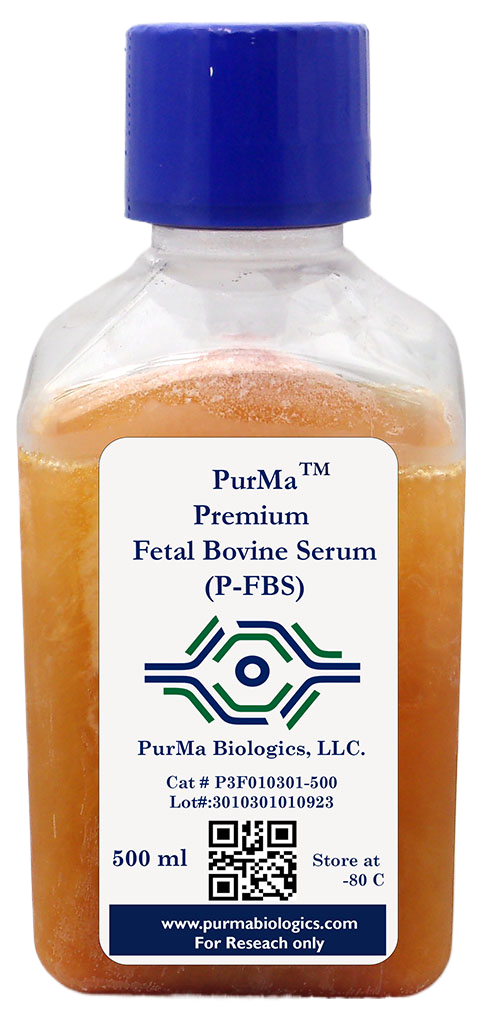
What Is FBS (Fetal Bovine Serum)?
Fetal Bovine Serum is collected from the blood of bovine fetuses and is the most widely used serum supplement in cell culture. It’s rich in growth factors, hormones, and attachment proteins, while containing very low levels of antibodies and complement. This combination makes FBS excellent for promoting rapid cell proliferation across the widest range of cell lines, which is why it’s considered the gold standard. Its main drawbacks are higher cost and more lot-to-lot variability.
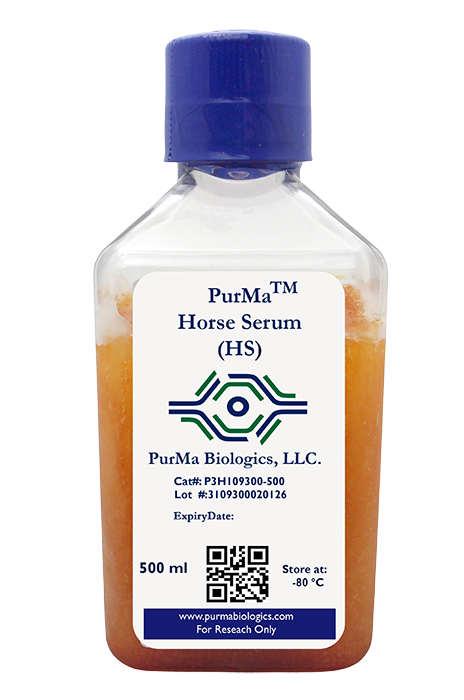
What Is Horse Serum?
Horse serum is collected from donor or adult horses, often from living donors, making it a more sustainable supply. It generally contains lower levels of growth factors than FBS, but tends to be more consistent from batch to batch and is usually more economical. Certain cell types actually perform better in horse serum, and it is the serum of choice for specific applications like muscle cell differentiation.
Horse Serum vs FBS: Key Differences
| Factor | FBS | Horse Serum |
|---|---|---|
| Source | Bovine fetuses | Adult / donor horses |
| Growth factors | Higher | Lower to moderate |
| Batch consistency | More variable | More consistent |
| Cost | Higher | Generally lower |
| Antibody / complement | Very low | Low (often heat-inactivated) |
| Best for | General proliferation, most cell lines | Differentiation, specific cell types |
When to Use Horse Serum
Horse serum is the better choice when:
- Muscle cell differentiation — myoblasts such as C2C12 switch from proliferation to differentiation when moved into low-percentage (around 2%) horse serum.
- Specific neuronal or primary cultures validated to perform better in horse serum.
- Lot-to-lot consistency matters for long-term or reproducible work.
- Lower antibody background is needed, such as in some immunological assays.
- Cost-sensitive, larger-scale work where the cells tolerate it well.
When to Use FBS
FBS remains the default when:
- You’re growing most standard proliferating cell lines.
- You need maximum growth factor support for demanding or slow-growing cells.
- Your established protocol specifies FBS, and switching would require re-validation.
Can You Switch Between Horse Serum and FBS?
Not as a simple one-to-one swap. Cells become adapted to their serum environment, so switching usually requires a gradual adaptation period and validation of growth and behavior. In some cases the switch is intentional and required — for example, moving myoblasts from FBS into low horse serum to trigger differentiation.
Frequently Asked Questions
Is horse serum better than FBS?
Neither is universally better. FBS supports faster growth for most cell lines, while horse serum offers more batch-to-batch consistency and is preferred for applications like muscle cell differentiation. The right choice depends on your cell type and goal.
Can I replace FBS with horse serum?
Not directly. Cells adapt to their serum, so any switch needs a gradual adaptation period and validation. Some protocols intentionally switch to low horse serum to trigger differentiation.
Why is horse serum cheaper than FBS?
Horse serum can be collected from living adult donors, making the supply more sustainable and generally more economical than FBS, which is sourced from bovine fetuses.
Choosing the Right Serum for Your Lab
For most general cell growth, FBS is the safe default. For muscle differentiation, specific primary cultures, batch consistency, or tighter budgets, horse serum is often the smarter choice. PurMa Biologics supplies research-grade Fetal Bovine Serum and Horse Serum to support both, with consistent quality for reliable results.
New to horse serum? Start with our guide on what horse serum is, its composition, and uses.