
FBS vs serum-free media is less a matter of one being better than the other, and more a question of which one your application actually needs. Standard fetal bovine serum (FBS) is the default for a reason, but chemically defined, serum-free media exist to solve specific problems FBS creates.
Standard FBS remains the practical, cost-effective default for general research. Choose serum-free CDM when regulatory compliance, reproducibility, or eliminating animal-derived components is the actual requirement.
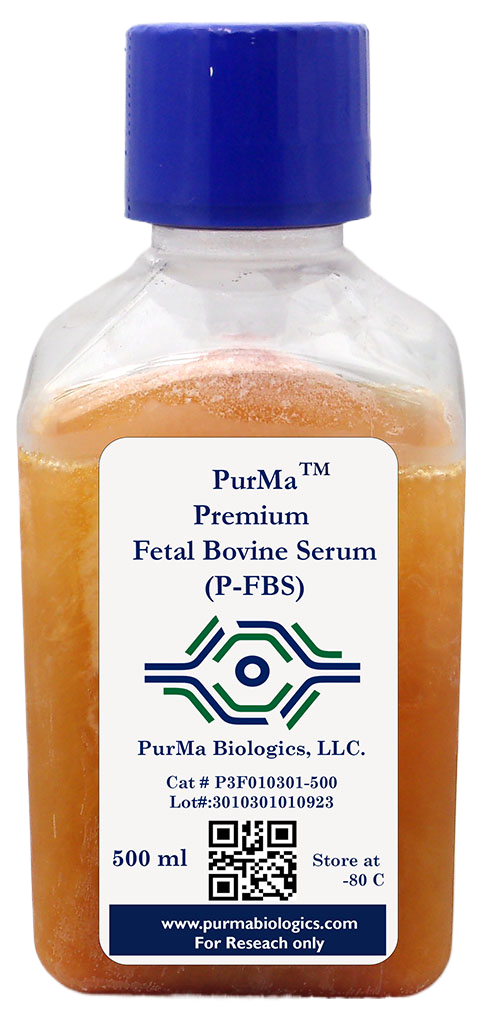
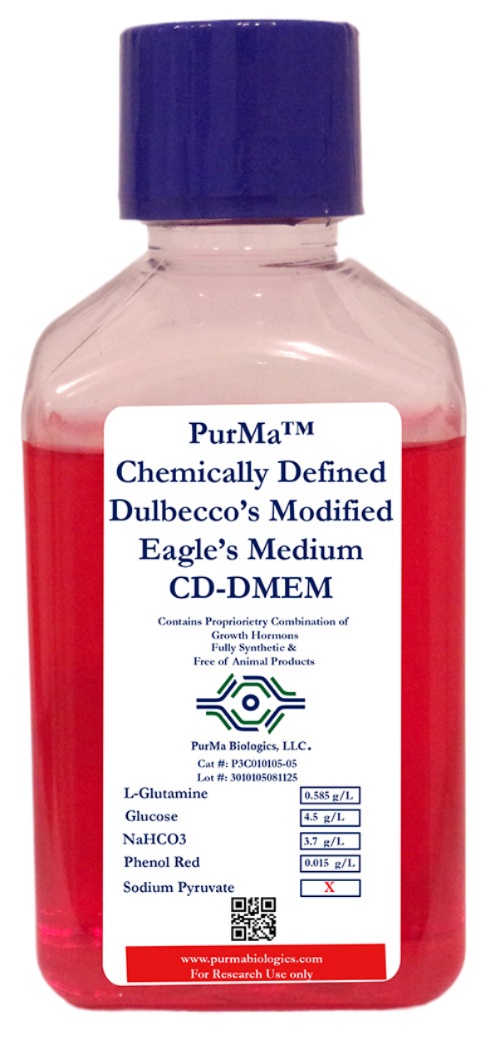
What Is FBS (Fetal Bovine Serum)?
FBS is a natural biological supplement rich in growth factors, hormones, lipids, and proteins that support proliferation across a wide range of cell types.
- Broad compatibility across established and novel cell lines
- A single, well understood default for most general research work
- Composition varies lot to lot, since it’s a pooled biological product
What Is Serum-Free Media?
Serum-free media replace FBS with a defined mix of synthetic or recombinant growth factors, hormones, lipids, and carrier molecules. The most rigorous version of this is Chemically Defined Media (CDM), where every single component and its concentration is known. This approach builds on foundational work by Barnes and Sato (Cell, 1980), who first laid out a systematic method for replacing serum with defined supplements.
- No animal-derived or undefined components
- Consistent, reproducible composition from batch to batch
- Removes the adventitious agent risk (viruses, prions, mycoplasma) that comes with an animal-derived product
- Often requires a cell-type-specific formulation rather than one-size-fits-all
FBS vs Serum-Free: Key Differences
| Factor | FBS | Serum-Free / CDM |
|---|---|---|
| Composition | Complex biological mixture, partially characterized | Fully defined, every component known |
| Lot-to-lot consistency | Variable by nature | High, since inputs are standardized chemicals |
| Regulatory profile | Carries adventitious agent risk | No animal-derived components to flag |
| Best for | General research, broad cell line compatibility | Regulatory-sensitive work, reproducibility-critical studies, GMP/clinical manufacturing |
Which One Should You Use?
- Running general research on an established protocol? Standard FBS remains the practical, cost-effective default for most cell lines.
- Working on FDA-regulated, GMP, or clinical-facing work? Serum-free CDM removes the animal-derived component and the documentation burden that comes with it.
- Chasing reproducibility across labs, technicians, or long timelines? CDM’s defined composition eliminates the serum-lot variable entirely.
Frequently Asked Questions
Can I switch an existing FBS-based protocol to serum-free media?
Often yes, but cell behavior can shift with the switch. Validate on a small batch, comparing growth rate, morphology, and your key assay readout, before committing a full study to the new medium.
Is serum-free media always the “better” option?
Not automatically. FBS supports broad compatibility at a lower validation burden. Serum-free CDM earns its place when regulatory alignment, reproducibility, or elimination of animal-derived components is the actual requirement.
Does serum-free mean the same thing as chemically defined?
Not always. Serum-free just means no serum is added. Chemically defined goes further, meaning every component in the medium, not just the absence of serum, is fully known and characterized. See our Chemically Defined Media guide for the full breakdown.
PurMa Biologics manufactures both Fetal Bovine Serum (FBS) and a full line of Chemically Defined, serum-free media across standard basal formats. See our product pages for full specifications.