
- ✓Proudly made in the USA, manufactured in house
- ✓Certificate of Analysis available for every lot
- ✓Backed by decades of cell culture and protein biochemistry expertise
- ✓Bulk pricing, purchase orders, and custom formulations welcome
EDTA Buffer Solution
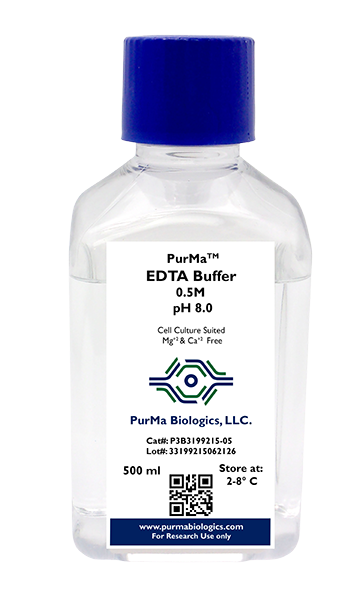
PurMa Biologics manufactures various grades of EDTA Buffer solution using different grades of water. Moreover, EDTA solution is suitable for biochemistry or molecular biology applications requiring a chelator of divalent metal ions. In fact, we adjust the pH to 8.0 by sodium hydroxide.
For research use only. Not for human, veterinary or diagnostic use.
Description
Background
PurMa Biologics manufactures various grades of PurMa EDTA Buffer Solution NaEDTA•2HO using different grades of water ( see below). Moreover, EDTA solution is suitable for biochemistry or molecular biology applications requiring a chelator of divalent metal ions. Additionally, we adjust the pH to 8.0 with sodium hydroxide.
Features
- Cell Culture Suited.
- provides a cost-effective and easy to use buffer.
- Suitable for a variety of biochemical applications.
- EDTA chelates heavy metals such as Mg2+ and Ca 2+.
- PurMa Biologics manufactures EDTA in Mg2+ and Ca 2+-free water.
- Free of RNAse /DNase
- Free of Proteases. It is rigorously tested for contaminating nonspecific endonuclease, exonuclease, and RNase activity.
- It is rigorously tested for contamination of endotoxin and mycoplasma.
- Is manufactured in two pH formats: pH: 8.00 ± 0.01 and 8.5 ± 0.01 at 25°C.
- Sterile filtered by 0.22µm membrane (in case of endotoxin depleted HBSS by 0.1µm)
- It is packed under N2; therefore, the pH won’t change over time before opening the bottle.
Formulation
For complete formulation, click here:EDTA Formulation
PurMa Biologics Manufactures Several Grades of Buffers
Regular Grade Buffer
PurMa Biologics manufactures Regular grade of buffer by using: PurMa™ Cell Culture Suited Water (Cat# P3W110101)
We sterilize the buffers by autoclaving the solution. Finally we pack the buffer in our Class 100 Aseptic Facility.
Cell Culture Suited Grade Buffer
PurMa Biologics manufactures this grade of buffer by using :PurMa™ Cell Culture Suited Water (Cat# P3W110101)
After adjusting the pH, we finally, sterilize the buffer by 3 times passing through 0.2 µm filters. Additionally, We pack the buffer under N2 gas in our Class 100 Aseptic Facility.
RNase and DNase Free Grade Buffer
PurMa Biologics manufactures this grade of buffer by using :PurMa™ Ultra-Pure Cell Culture Suited Water (Cat# P3W110102)
We sterilize the buffers by autoclaving the solution. Additionally, we pass the buffer three times through 0.1 µm filters, and finally pack it under N2 gas in our Class 100 Aseptic Facility.
Cell Culture Suited / Endotoxin Depleted Grade Buffer
PurMa Biologics manufactures this grade of buffer by using: PurMa™ Ultra-Pure Cell Culture Suited Water (Cat# P3W110102)
After depleting the endotoxins (see below for more details), we sterilize the buffer by 3 times passing through 0.1 µm filters and pack under N2 gas in our Class 100 Aseptic Facility
The Endotoxin Removing Procedure from Buffer
PurMa Biologics has the most sophisticated endotoxin removal procedure. To remove this pathogen, we pass the buffer through the PurMa™ Endotoxin Elimination Column (Cat# P6H1216251). Furthermore, in our proprietary column, we covalently conjugate Sepharose 6B to an endotoxin-specific absorbent. We finally eliminate the endotoxin residual by passing the unbound fraction three times through 0.1µm filters.
References
- Purification of two endonucleases from potato tubers. BJOERK W. Biochim Biophys Acta. 1965 Apr 19;95:652-62. PMID: 14324816.
- Chelating agents. Bergan T, Klaveness J, Aasen AJ. Chemotherapy. 2001 Jan-Feb;47(1):10-4. doi: 10.1159/000048495. PMID: 11125227.
| Parameter | Specification |
|---|---|
| Appearance | Clear liquid |
| pH | 8.0 ± 0.1; 8.5 ± 0.1 |
| Osmolality | 275-360 mOsm/L |
| Endotoxin | NMT< 2EU/mL |
| Mycoplasma | Negative |
| Suitability | Suitable for mammalian cell culture |
| Additive | N/A |
| Indicator | N/A |
| Mycoplasma Detection | Negative |
| Sterility Tested | Sterile filtered using 0.22 µm filter |
| Form | Liquid |
| Shipping Condition | Room temperature |
Additional information
| Concentration | 0.1 M, 0.5 M, 1 M |
|---|---|
| Grade | Regular, RNase and DNase Free, Cell Culture Suited, Ca and Mg Free, Cell Culture Suited, Ca and Mg Free, Endotoxin Depleted |
| pH | pH 8.0, pH 8.5 |
| Size | 1 x 100 ml, 6 x 100 ml, 1 x 500 ml, 6 x 500 ml |
Documents
Certificate of Analysis (COA): Available upon request for your specific order — email info@purmabiologics.com and we will send the current lot documentation.
Safety Data Sheet (SDS): Available upon request — email info@purmabiologics.com.
What our customers say about PurMa Biologics
Feedback from labs we supply, across our full catalogue.
I've ordered cell culture media multiple times. Great prices and excellent customer service. The ordering process was smooth, and everything arrived as expected. I'll definitely be purchasing from them again.
We buy all of our cell culture media, fetal bovine sera, and lipid-depleted sera from PurMa. The quality of their reagents is absolutely top-notch, giving us reliable, repeatable results in our experiments. We highly recommend PurMa!
We have been working with PurMa biologics for the past several years, we buy cell culture related media like DMEM F12 and EMEM and Fetal Bovine Serum. We appreciate the high quality and reasonable price, and great customer service.
We purchase everything we need related to cell and tissue culture from PurMa, reagents like: DMEM, LL15, EMEM, FBS, trypsin, antibiotics mix100X and... Always great quality, fast processing and shipping. We are totally satisfied.
Very fast, efficient, and economic service. Great for new PIs like me.
it is reliable vendor!
Frequently asked questions
Should I choose a buffer with or without calcium and magnesium?
Cation-free is standard for washing monolayers before trypsinisation, because calcium and magnesium promote adhesion. Choose the version containing them where you need to maintain attachment or calcium-dependent protein interactions.
What pH should I order?
Match the pH to your application rather than defaulting. Most cell culture work uses pH 7.4, but buffers are supplied across a range and the correct choice depends on the assay. If the description and the orderable options appear to differ, ask before ordering.
How should EDTA Buffer Solution be stored?
Follow the storage line on the Certificate of Analysis. Most buffers are stable at room temperature sealed, and the practical limit after opening is contamination rather than chemistry, so decant rather than repeatedly pipetting from the stock bottle.
Is it endotoxin tested?
Yes, each lot is tested and the result is reported on the Certificate of Analysis. Endotoxin survives autoclaving, so buffer purity matters even for solutions that are sterilised on site.
Can I autoclave it myself?
Autoclaving sterilises but does not remove endotoxin or ionic contaminants. It can also shift pH and, in formulations containing calcium or magnesium, cause precipitation. Filter sterilisation is safer for those.
Related products
-
- Sale!
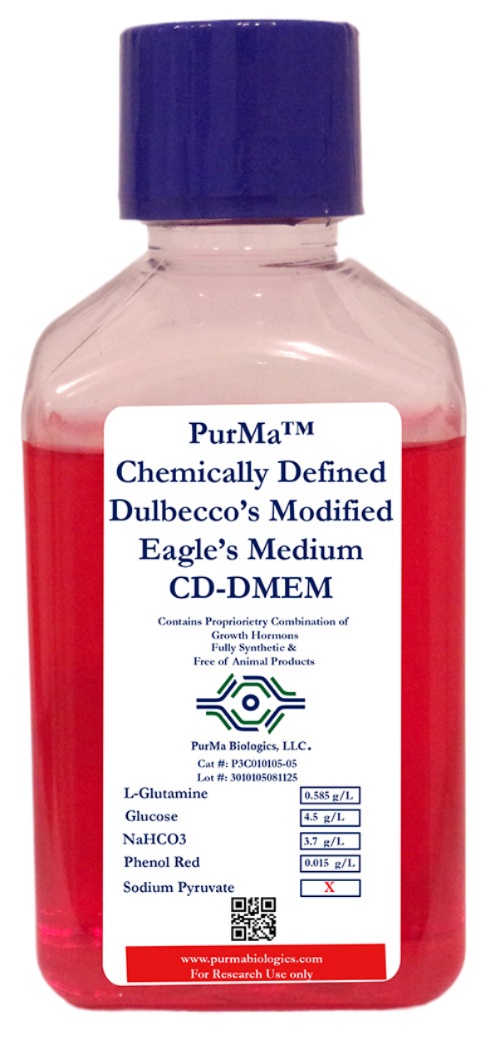
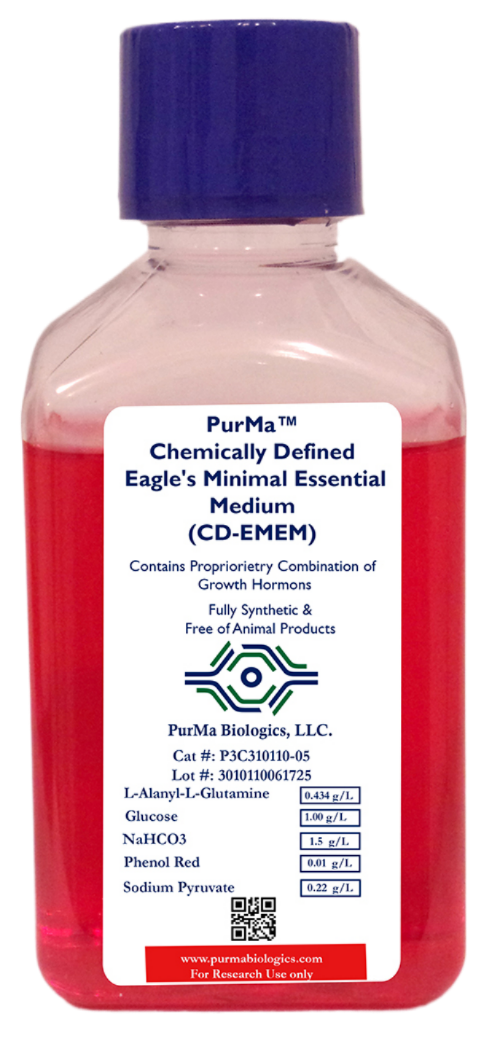
- Cell Culture Media, Dulbecco’s Modified Eagle’s Medium (DMEM)
PurMa™Chemically Defined (CD) (CD-DMEM)
- Price range: $389.69 through $971.39
- Select options This product has multiple variants. The options may be chosen on the product page
-
- Sale!
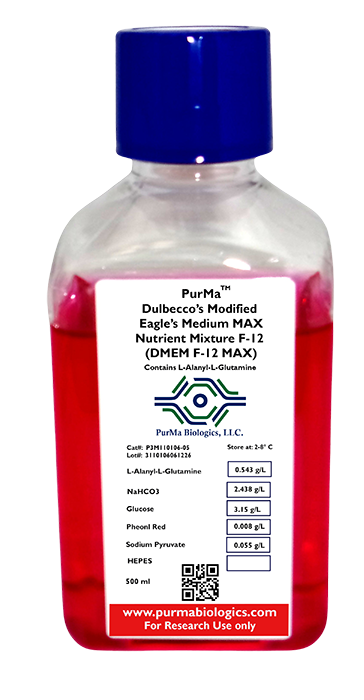
- Cell Culture Media, DMEM F-12
PurMa™ Dulbecco’s Modified Eagle’s Medium/F-12 MAX (DMEM F12-MAX)
- Price range: $31.10 through $590.46
- Select options This product has multiple variants. The options may be chosen on the product page

Reviews